
June 20, 2024
Patina, Preservation, or Restoration?
A closer look at the decisions that shape a car’s future, its usability, and its long-term collector appeal.
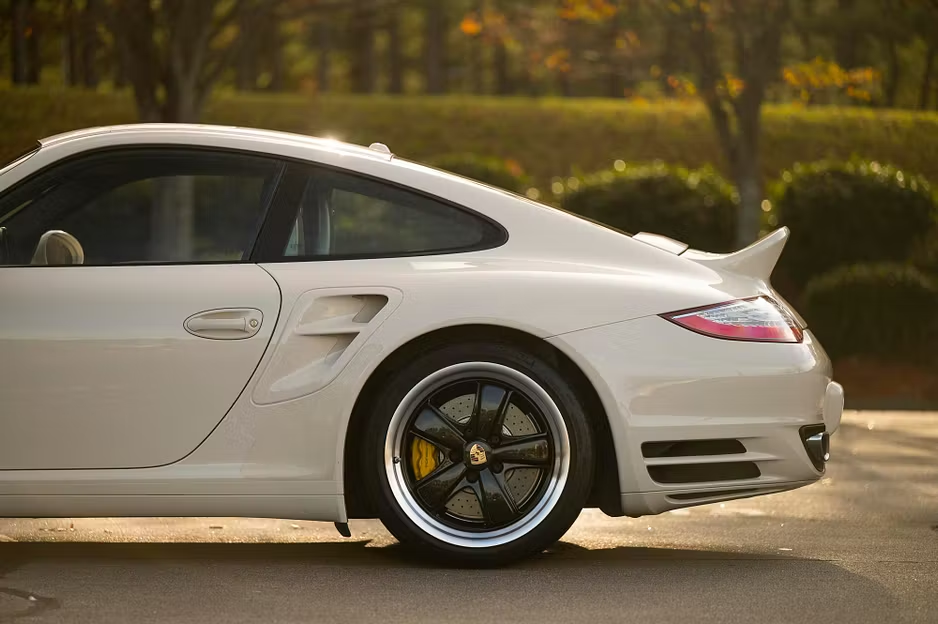
Every significant car eventually asks its owner a question: should it be preserved, sympathetically improved, or fully restored? The answer is rarely universal. It depends on the car, the history, the condition, and the collector’s intended use.
Patina can be meaningful when it is honest. Original paint, worn leather, factory finishes, and age-consistent details can create a kind of evidence that restoration may never fully replace. But patina is not a magic word. Neglect is still neglect, and deferred needs do not become provenance simply because they are old.
Preservation Requires Discipline
The most successful preservation work is quiet. It stabilizes the car without erasing the qualities that make it compelling. Mechanical sorting, careful detailing, documentation, and reversibility all matter. The goal is not to make the car appear untouched. The goal is to avoid making it less truthful.
A preserved car should feel cared for, not corrected beyond recognition.
Restoration has its place as well. Some cars are too compromised, too deteriorated, or too historically important to leave in decline. A proper restoration can return clarity to a car that has been misunderstood by time, use, or previous work.
The Better Decision
- Start with documentation before making cosmetic decisions.
- Separate mechanical safety from visual preference.
- Consider how the work will read to the next knowledgeable caretaker.
The best path usually respects both the car’s past and its next chapter. For collectors, that balance is where long-term value often lives.